Drone Insurance and Liability Coverage: Do You Need It?
.svg)

Quick Summary
Commercial drone insurance usually starts with two core coverage types: hull insurance for damage to your drone and sensors, and liability insurance for injury or property damage caused by your operations. Annual policies typically range from $1,000 to $10,000 per drone, and many commercial operators carry at least $1 million in liability coverage.If your team flies less often, on-demand policies are also available, with hourly liability coverage starting under $10 per flight hour.
Commercial drone work puts expensive equipment into unpredictable conditions. A typical setup can include the aircraft, camera, RTK hardware and batteries, and one hard landing or flyaway can turn a normal flight day into a claim. If you are building a program with DroneDeploy Aerial, insurance belongs in the plan from the start.
This guide covers the coverage types most operators compare first. It also covers what those policies usually cost and how to think about coverage limits for your work. The goal is a practical starting point for commercial operators.
Do I need drone insurance?
Yes. For commercial operators, insurance is part of getting approved to work, not just a back-office detail. Many general contractors, facility owners and enterprise clients want proof of liability coverage before they let a drone crew on site.
It also protects equipment that is expensive to replace. A commercial system with RTK hardware, cameras and sensors can easily run from $5,000 to $30,000 or more. Hull coverage helps protect that investment when you are dealing with crashes, flyaways or mechanical failures.
The FAA does not currently require insurance for commercial drone operators in the US. Some countries, such as Canada, do require it by law. Recreational flyers in the US are usually not required to carry coverage, but basic liability options are available, and you should still check local, state and federal rules before flying.
What are the risks of a commercial drone operation?
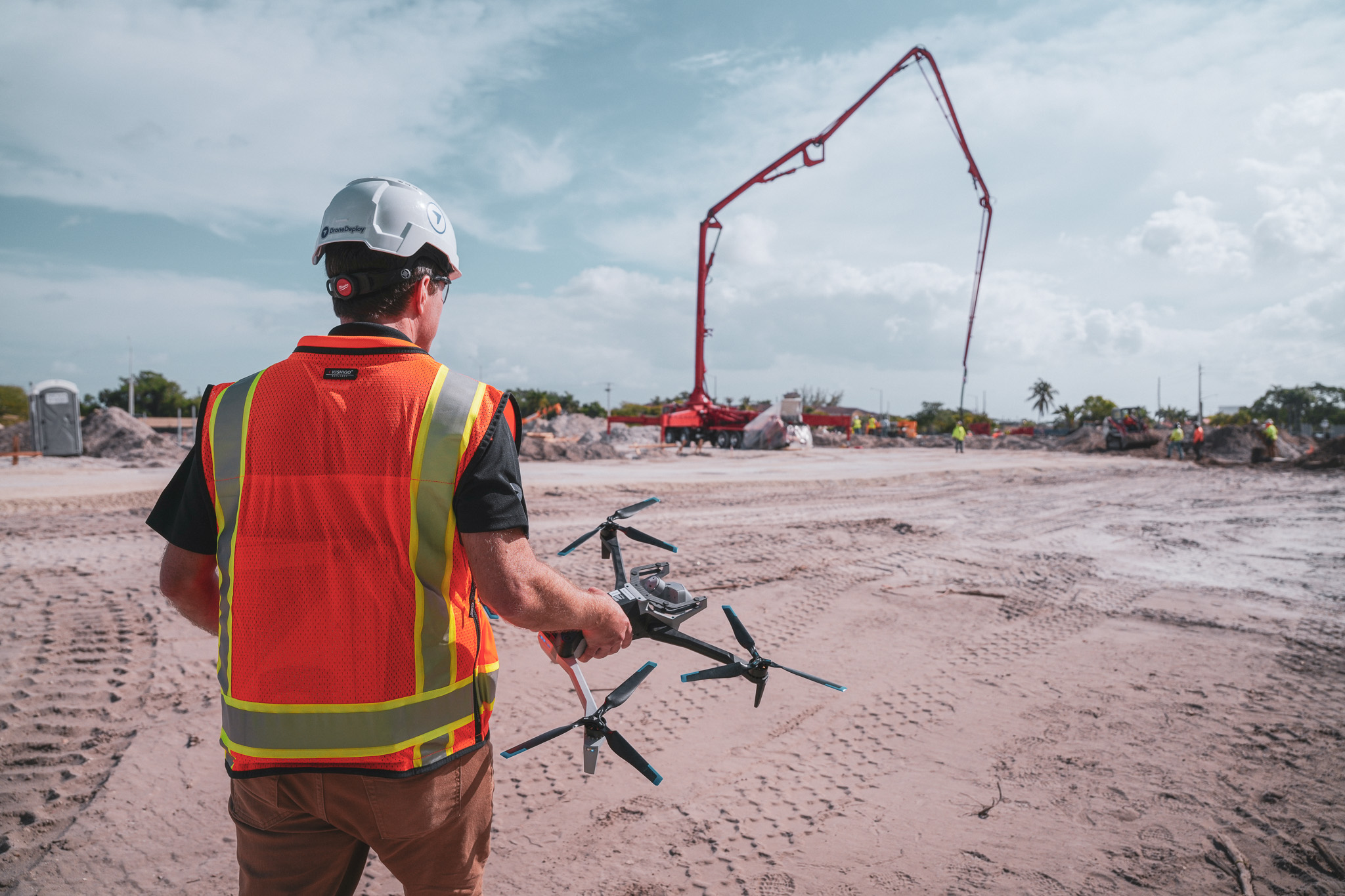
Active job sites are dense working environments. You may be flying around cranes, scaffolding, power lines, heavy equipment and workers moving through the same area. That creates a very different risk profile than flying in an open field.
Most of the exposure falls into two categories. The first is damage to your own equipment, including the airframe, gimbal, camera, sensors and RTK modules. The second is damage to third-party property or injury to people if a flight goes wrong.
Following federal regulations and using disciplined operating procedures lowers the chance of an incident. Good planning, pilot training and documented checklists also matter, and you can review practical steps in this guide to safety precautions. Risk never fully disappears, which is why insurance belongs alongside the rest of the program.
What types of drone insurance are available?
Most commercial policies still start with hull and liability coverage. Some providers also offer medical payments, air crew coverage, premises liability and on-demand flight coverage. For most operators, hull and liability are the main categories to compare first.
Hull insurance
What it covers: Physical damage to the drone, expensive cameras, sensors, and RTK GPS units.
When you need it: Recommended for high-value equipment to protect against crashes or flyaways.
Hull insurance covers the aircraft itself, but that is only part of the system value. Many policies separate airframe coverage from accessory or payload coverage for cameras, thermal sensors, LiDAR units and RTK modules, and some also cover field equipment such as tablets, charging stations, base stations and transport cases. When you review a policy, make sure the insured value reflects the full system you use on site, not just the airframe.
Liability insurance
What it covers: Third-party bodily injury and property damage caused by drone operations.
When you need it: Essential for commercial work; often required by clients and employers.
Liability insurance covers third-party bodily injury and property damage caused by your drone operations. In commercial work, clients often ask for certificates of insurance before a flight, and some require that they be named as additional insureds. That paperwork is a normal part of getting approved to operate on active sites.
Some liability policies also include personal injury coverage for claims such as invasion of privacy, which can matter when imagery is involved. Medical payments sub-limits are also common, often in the $5,000 to $25,000 range. Those smaller limits can help resolve minor incidents before they turn into larger claims.
How much does drone insurance cost?
Pricing depends on the equipment you fly, how often you fly and how your operation is managed. Underwriters usually look at the same core factors across most commercial programs. The more complete your documentation is, the easier it is to explain risk.
- The number of drones in your fleet
- The types of drones, cameras and sensors you’re operating
- Pilot training, certifications and flight experience
- Maintenance records and incident history for your fleet
- Safety procedures used by your team
Commercial drone insurance costs typically range from $1,000 to $10,000 per drone, per year, depending on your specific risk profile and coverage limits. Operators with documented safety procedures, formal training and a clean incident history may be able to secure better pricing. Larger fleets and more complex sensor packages usually increase the premium.
On-demand coverage is also common now. Hourly liability policies often start around $9 to $15 per flight hour for $1 million in coverage. That can be a practical option for teams that fly less frequently or only need coverage for specific jobs.

How much coverage should I purchase?
For many commercial operators, client requirements set the floor. Liability coverage minimums vary based on the project scope and client risk tolerance. General contractors and site owners typically establish baseline requirements, while larger or more complex projects often call for higher limits. Some providers can quote coverage well beyond standard minimums when the work requires it.
If youare running an in-house drone program, align coverage with your company's broader insurance structure. Your legal and risk teams can help determine whether your drone operation should sit inside an existing framework or carry its own limits. The right answer usually depends on the assets you inspect, the sites you fly and the documentation requirements tied to the work.
If you are an independent service provider, industry-standard liability limits are a practical starting point. Higher limits may make sense when you are flying around active construction sites, critical infrastructure or high-value assets. In many cases, the premium difference between baseline and elevated coverage is smaller than operators expect.

How DroneDeploy fits into a managed drone program
Insurance is one part of a managed drone program. Flight planning, data capture, organized records and safety procedures all matter when you are trying to run work across active sites. That is where DroneDeploy fits into the day-to-day workflow.
Flight logs, geolocated imagery and project data give teams a clear record of what was captured and when. That documentation can support claims, compliance reviews and routine record keeping. You can see related tools in the App Market and on the integrations page.
Next steps
If you are reviewing insurance for a commercial drone program, keep the process practical. Compare the policy structure, the limits and the documentation requirements. Then make sure your capture workflow supports the same standard of record.
- Get quotes from at least two providers for hull and liability coverage, and compare annual policies with on-demand options.
- Document your safety procedures, training records and maintenance logs so underwriters have a clear view of how the program is managed.
- Build a capture workflow with timestamped maps, geolocated imagery and flight logs so you have a usable record when questions come up later.
If you are formalizing a drone program, it helps to review coverage and documentation at the same time. A consistent record makes insurance conversations easier. Request a demo to see how teams manage flight records, imagery and project history in one place.
.png)
FAQ
Related articles
Ready to learn more?
Contact sales to see how DroneDeploy can give your teams the power to document and analyze your sites from the air and ground – all in one AI-powered platform.