How field teams use drones across every project phase
.svg)

Quick Summary
Drones have become standard equipment across every phase of construction – from preconstruction surveys to closeout – giving field teams a way to capture what's actually built, catch drift between plan and reality and turn flight data into maps, models and shared references that hold up across the life of a project when paired with a platform like DroneDeploy.
Construction schedules move fast, and the gap between what's planned and what's actually built shows up in different ways on every project. Topography doesn't always match the survey. Subcontractor installs drift from design. Measurements taken weeks apart don't line up. This is the reality of managing complex sites where dozens of trades work in sequence across changing conditions. Drones give field teams a way to capture what's actually there, when it matters, so decisions are based on current records rather than assumptions. When paired with a platform like DroneDeploy, the data from those flights turns into maps, models and shared references that hold up across the life of a project.
Key takeaways
- Significant Cost Savings: Drone technology can reduce site mapping costs compared to traditional helicopter surveys.
- Enhanced Accuracy: Users report improvement in data quality and a reduction in the time required to gather site data.
- Improved Safety: Utilizing drones for inspections leads to an improvement in job site safety by keeping personnel out of dangerous areas.
- Better Collaboration: Visual drone data improves communication and collaboration across project teams.
"Drones change the game in communication. A photo is worth a thousand words, and potentially millions of dollars."
– Ryan Moret, Field Solutions Manager, McCarthy Building Companies Inc.

Mapping your construction site
Before drones, aerial site data usually came from a helicopter or fixed-wing flyover. Those flights were expensive, hard to schedule on short notice and often delivered imagery that lacked the resolution or georeferencing teams actually needed.
Drone mapping compresses that entire cycle. A pilot flies a planned mission over the site in under an hour, and the platform processes the imagery into orthomosaic maps, 3D models and point clouds, often the same day. Teams use those outputs to verify existing conditions, compare actuals to design surfaces and track changes over time with consistent accuracy. With RTK or GCP workflows, the data reaches survey-grade precision, which means field crews and office teams work from the same georeferenced reference, not separate assumptions about what the site looks like.

Verifying subcontractor work on site
On a large jobsite with dozens of active trades, keeping a clear picture of what's actually installed takes deliberate effort. Weekly or biweekly drone flights create a timestamped aerial record that project managers reference when reviewing progress claims, comparing installed work to design and coordinating upcoming phases. The same flight path, repeated over time, builds a visual timeline that shows exactly what changed between captures.
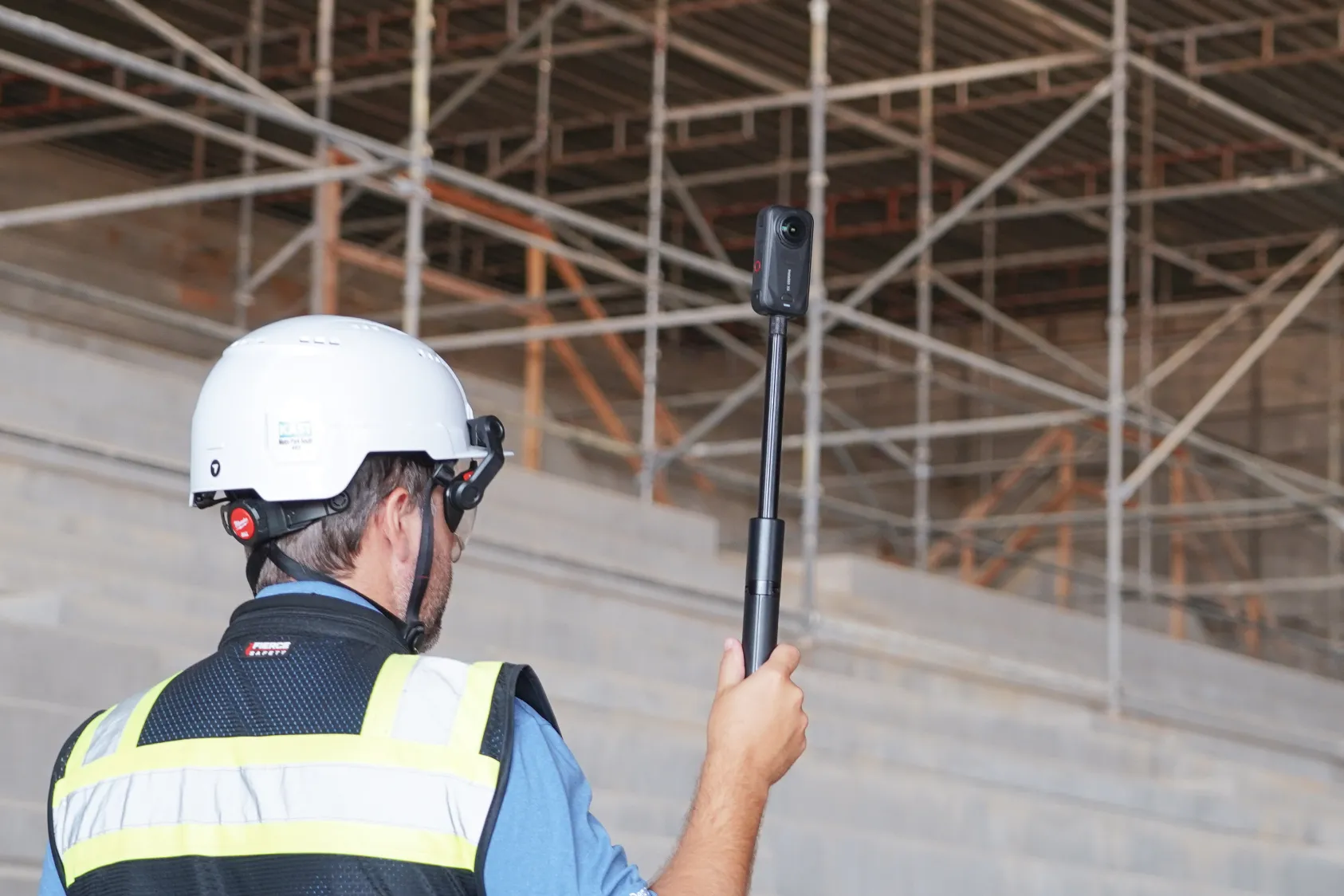
Ground-level documentation fills in the detail that aerial views can't reach. Teams walk interiors with 360 cameras to record framing, MEP rough-ins and finishes floor by floor. When aerial and ground data live in the same platform, a project manager can verify a subcontractor's progress claim against both the overhead map and the interior walkthrough without scheduling another site visit. AI-powered tools like Progress AI go further, automatically detecting installed work across 80+ trade types and generating structured progress reports within hours of capture.
The result is a shared visual record that owners, GCs and subs can all reference. Disputes over what was installed and when become easier to resolve when everyone looks at the same geolocated imagery rather than relying on competing accounts of what happened on site.

Safety and equipment checks with drones
Site managers already run rigorous safety programs. Drones add a layer of documentation that supports those programs by capturing conditions across the entire site in a fraction of the time a manual walkthrough would take. Rooftops, structural steel, excavation edges and confined spaces can all be inspected from the air, reducing the number of times crews need to access high-risk areas on foot.
The value goes beyond aerial flyovers. Teams that capture regular 360 ground walks can now run that imagery through Safety AI, which analyzes the visual data against OSHA 1910/1926 standards and flags risks like missing guardrails, exposed edges or improper PPE. The reports map findings directly to the site plan, so safety leads can prioritize corrective actions by location rather than sorting through folders of unstructured photos.
For phase audits and work certification, drone-captured records provide a timestamped visual reference that supports compliance documentation. The inspection happens once, and the record stays available for review long after the work moves on.
Where drones fit across the project lifecycle
The use cases above cover the most common starting points, but drone programs on active construction sites extend well beyond mapping, progress tracking and safety. Here's where teams put drones to work across project phases.
Preconstruction and earthworks. Aerial surveys document existing conditions before any ground is broken. Once earthwork begins, regular flights track cut/fill volumes against design surfaces, giving project managers an accurate picture of how much material has moved and how much remains. Stockpile volumetrics calculated from 3D models replace manual tape-and-level measurements with consistent, repeatable data.
Underground utilities and foundations. Before concrete is poured or backfill covers the work, drone and ground-level captures document what's installed below grade. These records become the reference point months later when someone needs to confirm where a conduit run or utility tie-in actually sits, without cutting into finished work to find out.
Structure, exterior and interior. As buildings go vertical, aerial 360 panoramas capture steel and decking installs from vantage points that are impractical to reach on foot. Design overlays compare what's built against what's planned. Interior documentation with 360 cameras records framing, blocking, MEP rough-ins and finishes before walls close up. Thermal mapping identifies insulation gaps or moisture intrusion that aren't visible to the naked eye.
Environmental monitoring and site logistics. Drones track the impact of construction activity on surrounding areas, including erosion, stormwater management and vegetation disturbance. On large sites, regular flights also support material and equipment tracking, giving logistics teams a current view of what's on site and where it's staged without walking every laydown area.
Closeout and operations. At project completion, a final capture creates a comprehensive as-built record. That record carries forward into facility operations, giving maintenance teams a visual reference for the building as it was handed over, useful for warranty claims, renovation planning and ongoing inspections.
Want to learn more?
If your team is evaluating how drones fit into your construction workflows, or if you're already flying and want to get more from the data, there are a few places to start. DroneDeploy supports the full workflow from flight planning through processing, analysis and reporting, with aerial, ground and robotic capture all in one platform.
Download our reality capture playbook for construction to get an in-depth overview of all the way drones are improving jobsites.
Or unlock the power of drones today by requesting a demo with a member of our team.
.png)
FAQ
Yes. Drones are used across all phases of a construction project, from initial site surveys through final inspections. Teams fly them to map sites, track earthwork progress, document installs, verify subcontractor work and inspect areas that are difficult or unsafe to reach on foot. Construction companies that run active drone programs consistently report faster data collection and better coordination across project teams.
In the United States, anyone flying a drone for commercial purposes, including on a job site, needs an FAA Part 107 Remote Pilot Certificate. Earning that certificate requires passing a knowledge test through the FAA. Some contractors certify their own in-house pilots; others work with licensed drone service providers. Either way, any drone weighing more than 0.55 pounds must also be registered with the FAA before it takes flight.
Related articles

Ready to learn more?
Contact sales to see how DroneDeploy can give your teams the power to document and analyze your sites from the air and ground – all in one AI-powered platform.